English
 العربية
 Français
 Deutsch
 Nederlands
 中文
 Русский

Few fruits inspire as much passion in Egypt as the mango. Grown mainly in Ismailia, Sharqia and the reclaimed lands around the Nile Delta, Egyptian mangoes are known for their intense aroma, rich sweetness and smooth flesh. For importers, Egypt offers a summer-to-autumn season, a choice of international and traditional varieties, and year-round supply of IQF mango. This guide compares the varieties you are most likely to be offered.
The Egyptian mango season
The export season generally runs from July to October. Early varieties open the season in July, mid-season varieties peak in August, and Keitt extends the season into October. Because the harvest window for each variety is relatively short, planning orders around the calendar is key to getting the best quality.
International varieties
Keitt
Large, oval fruit (often 500–1,000 g) with a green to green-yellow skin even when ripe, and firm, juicy, low-fibre flesh. Keitt is a late variety (September–October) with excellent shipping performance, making it a top choice for long-distance sea freight and for processing.
Kent
A large, round-oval mango with a green skin and a red blush, very sweet and almost fibreless. Kent is popular in European retail and ripens well after arrival.
Tommy Atkins
Medium to large, with an attractive red-purple blush and firm flesh. Its strong skin and long shelf life make it a reliable commercial variety, although the flesh is slightly more fibrous.
Naomi
An Israeli-bred variety grown successfully in Egypt, with an attractive red blush, sweet taste and good firmness for export.
Traditional Egyptian varieties
Ewais (Owais)
Small to medium, yellow fruit with an exceptional aroma and very sweet, smooth flesh. Ewais is considered by many Egyptians to be the finest mango and is in high demand in the Gulf and among Middle Eastern communities worldwide. It is more delicate and is best for air freight or nearby markets.
Zebda
Large, green-yellow fruit with buttery (“zebda” means butter) flesh and a mild, rich flavour. Popular for fresh eating and juice.
Sukkary and Seddika
Sweet, aromatic local varieties loved for fresh consumption and widely used in juice and nectar production.
Comparison table
| Variety | Size | Skin colour | Fibre | Best for |
|---|---|---|---|---|
| Keitt | Large | Green / green-yellow | Very low | Sea freight, retail, processing |
| Kent | Large | Green with red blush | Very low | European retail |
| Tommy Atkins | Medium–large | Red-purple blush | Medium | Long shelf life programmes |
| Ewais | Small–medium | Yellow | Low | Premium Gulf and ethnic markets |
| Zebda | Large | Green-yellow | Low | Fresh eating, juice |
Packing and shipping fresh mangoes
Fresh mangoes are graded by weight and packed in single-layer ventilated cartons, commonly 2.5 kg, 3.5 kg or 4–5 kg. Fruit is harvested mature but firm, cooled and shipped at around 10–13 °C — mangoes are sensitive to chilling injury below about 10 °C. For delicate varieties such as Ewais, air freight preserves the best eating quality.
IQF mango: the year-round solution
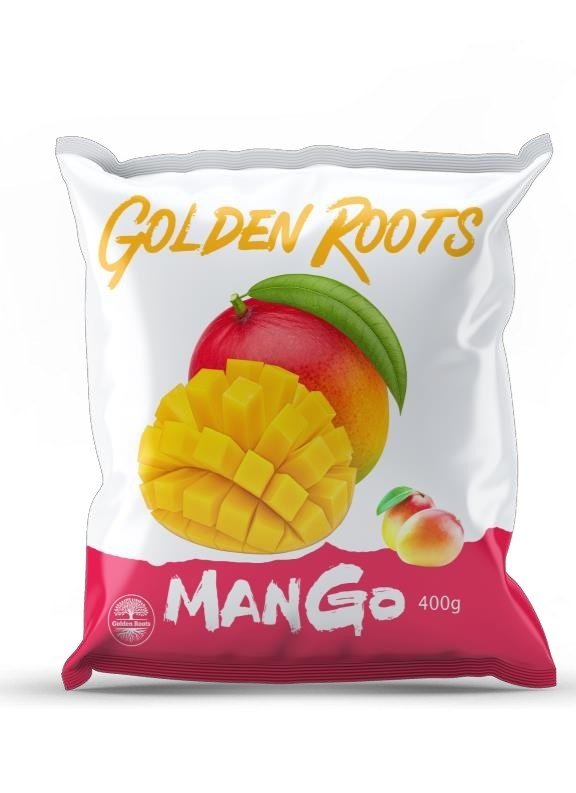
Because the fresh season is short, many buyers complement fresh imports with IQF mango. Golden Roots processes ripe Keitt, Kent, Ewais, Zebda and Naomi fruit into cubes of 10–20 mm (ideal for juices, smoothies and fruit salads) and slices of 5–10 mm (for desserts, toppings and ice cream). Products are packed in 400 g and 1 kg retail bags or 10–20 kg bulk cartons and keep for up to 24 months at –18 °C.
Tips for buyers
- Match the variety to your market: Keitt and Kent for mainstream retail, Ewais and Zebda for Middle Eastern consumers.
- Agree the ripeness stage and minimum dry matter or Brix at harvest.
- Specify weight grades and the number of fruits per carton.
- Plan ripening at destination if you supply ready-to-eat programmes.
Explore our fresh mango page or request this season’s mango offer.
Frequently Asked Questions
When is the Egyptian mango season?
The Egyptian mango export season generally runs from July to October, with early varieties starting in July and Keitt finishing the season into October.
Which Egyptian mango variety is best for export?
Keitt and Kent are the most popular for long-distance export thanks to their size, firmness and low fibre, while Ewais and Zebda are prized in Gulf and ethnic markets for their intense aroma.
Are Egyptian mangoes available frozen?
Yes. Golden Roots supplies IQF mango cubes and slices, processed from ripe fruit and available all year round.