English
 العربية
 Français
 Deutsch
 Nederlands
 中文
 Русский
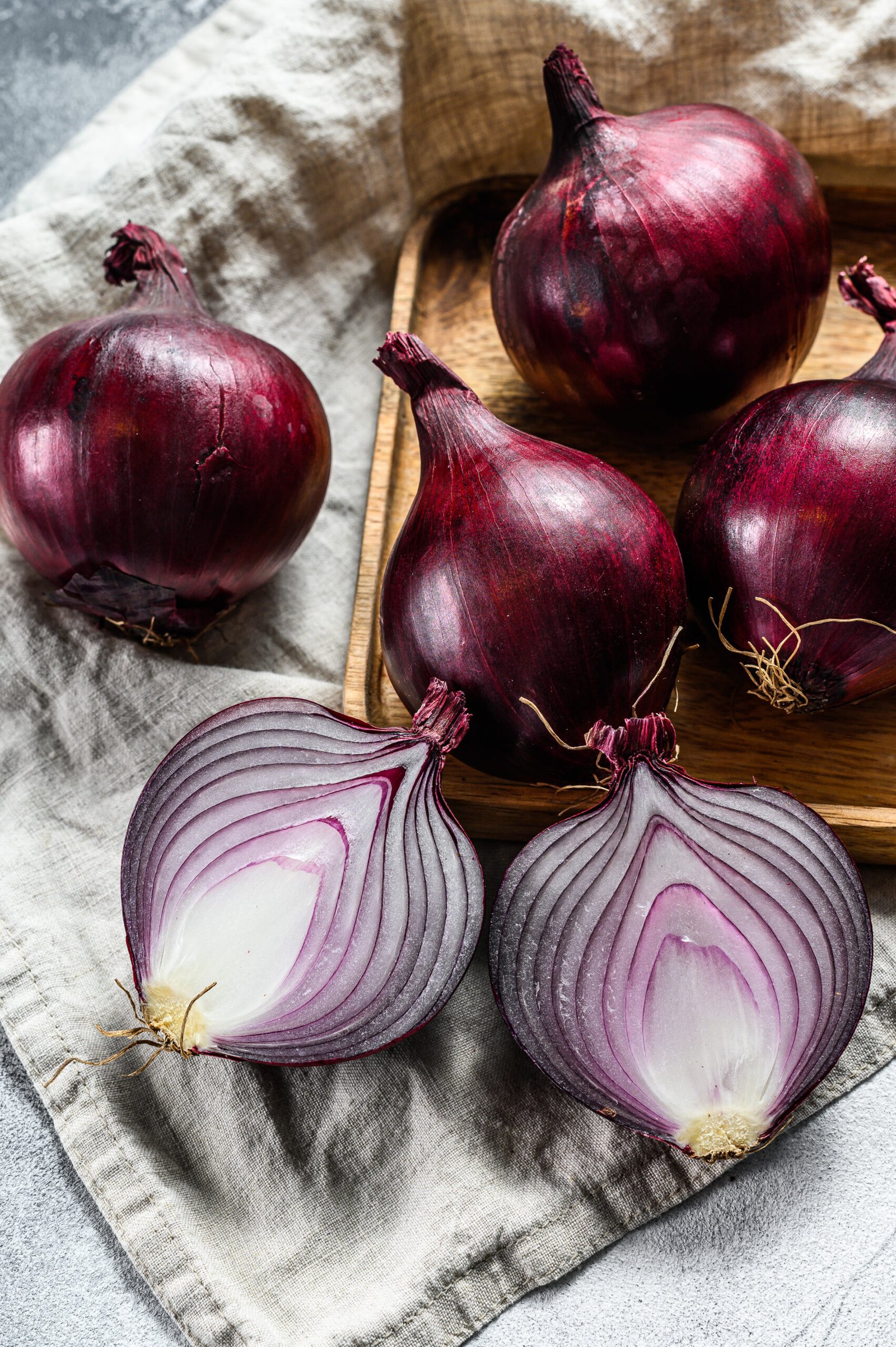
Onions and garlic are staples in every kitchen in the world — and Egypt is one of their most important suppliers. Egyptian onions are prized for their strong flavour, firm texture and excellent storability, and Egyptian garlic for its aroma and high oil content. This guide explains varieties, grades, curing, packing and storage so you can buy with confidence.
Egyptian onions: varieties and seasons
Egypt grows onions in several regions — the Delta, Middle Egypt and Upper Egypt — which spreads harvests across much of the year. The main export types are:
- Golden (yellow) onions — globe-shaped with a golden-brown skin and white flesh; the most widely traded type. See Golden Onion.
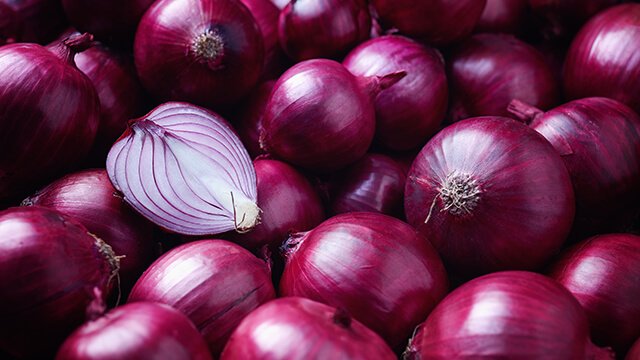
- Red onions — deep red skin and white-to-pinkish flesh, popular in Europe, the Gulf and Africa. See Red Onion.
- White onions — milder flavour, used in food service and processing.
- Spring onions — fresh green onions for salads and garnishing. See Spring Onion.
The main export season for dry onions runs from about March to October, with stored onions available beyond that.
Size grades
| Grade | Diameter | Typical use |
|---|---|---|
| Small | 40–60 mm | Retail nets, pickling, processing |
| Medium | 60–80 mm | Retail and wholesale |
| Large | 80–100 mm | Food service, processing |
Curing: the secret of long storage
After harvest, onions are cured — dried in the field or in ventilated stores — until the neck is tight and the outer skins are dry and papery. Proper curing seals the bulb, reduces water loss and protects against rot and sprouting. Well-cured Egyptian onions can withstand long sea voyages to Asia, Africa and Northern Europe. When buying, ask about curing time, dry matter and the percentage of double or split bulbs allowed.
Egyptian garlic
Egyptian garlic is known for its strong aroma, high allicin content and attractive white or purple-tinged bulbs. Varieties include Baladi (local) and Chinese-type garlic, with bulb sizes commonly 35–55 mm or more. Fresh (green) garlic is available from about February, while dry, cured garlic is shipped from around June and from cold storage for much of the year. See our garlic page for details.
Packing options
- Onions: mesh bags of 10 kg and 25 kg, or jumbo bags of about 1,000 kg
- Garlic: mesh bags of 5, 10 or 20 kg, or 10 kg cartons
- Retail nets and private-label packs on request
Loading plans matter: for example, 10 kg onion bags can be palletised at around 158 bags per pallet, and 25 kg bags at around 63 bags per pallet, with 18–20 pallets per 40ft container depending on configuration.
Storage and shipping conditions
Dry onions keep best cool and dry, with good ventilation. For long voyages, ventilated reefers at low temperature reduce sprouting and weight loss; for short routes, ventilated dry containers are sometimes used outside the hot season. Garlic is stored close to 0 °C with low humidity. Always avoid condensation — moisture is the main cause of mould in onions and garlic.
Quality checklist
- Firm, well-cured bulbs with tight necks
- Uniform size within the specified grade
- No sprouting, rot, black mould or mechanical damage
- Clean, intact outer skins
- Compliance with destination MRLs
Golden Roots exports Egyptian onions and garlic to buyers across Europe, the Gulf, Africa and Asia. Ask for our current offer.
Frequently Asked Questions
What sizes of Egyptian onions are available?
Typical size grades are 40–60 mm, 60–80 mm and 80–100 mm, packed in 10 kg or 25 kg mesh bags or 1,000 kg jumbo bags.
How long do Egyptian onions keep?
Well-cured dry onions stored cool and ventilated can keep for several months, which makes them suitable for long sea voyages to Asia, Africa and Europe.
When is Egyptian garlic available?
Fresh (green) garlic is typically available from about February, and cured dry garlic from around June onwards, allowing year-round supply from cold storage.