English
 العربية
 Français
 Deutsch
 Nederlands
 中文
 Русский
Frozen fruits and vegetables are one of the fastest-growing categories in global food trade. Retailers want convenient, waste-free products; food manufacturers want consistent ingredients all year; restaurants want speed in the kitchen. The technology that made this possible is IQF — Individually Quick Freezing. This article explains how IQF works, why it matters for quality, and what importers should check when buying IQF products from Egypt.
What is IQF?
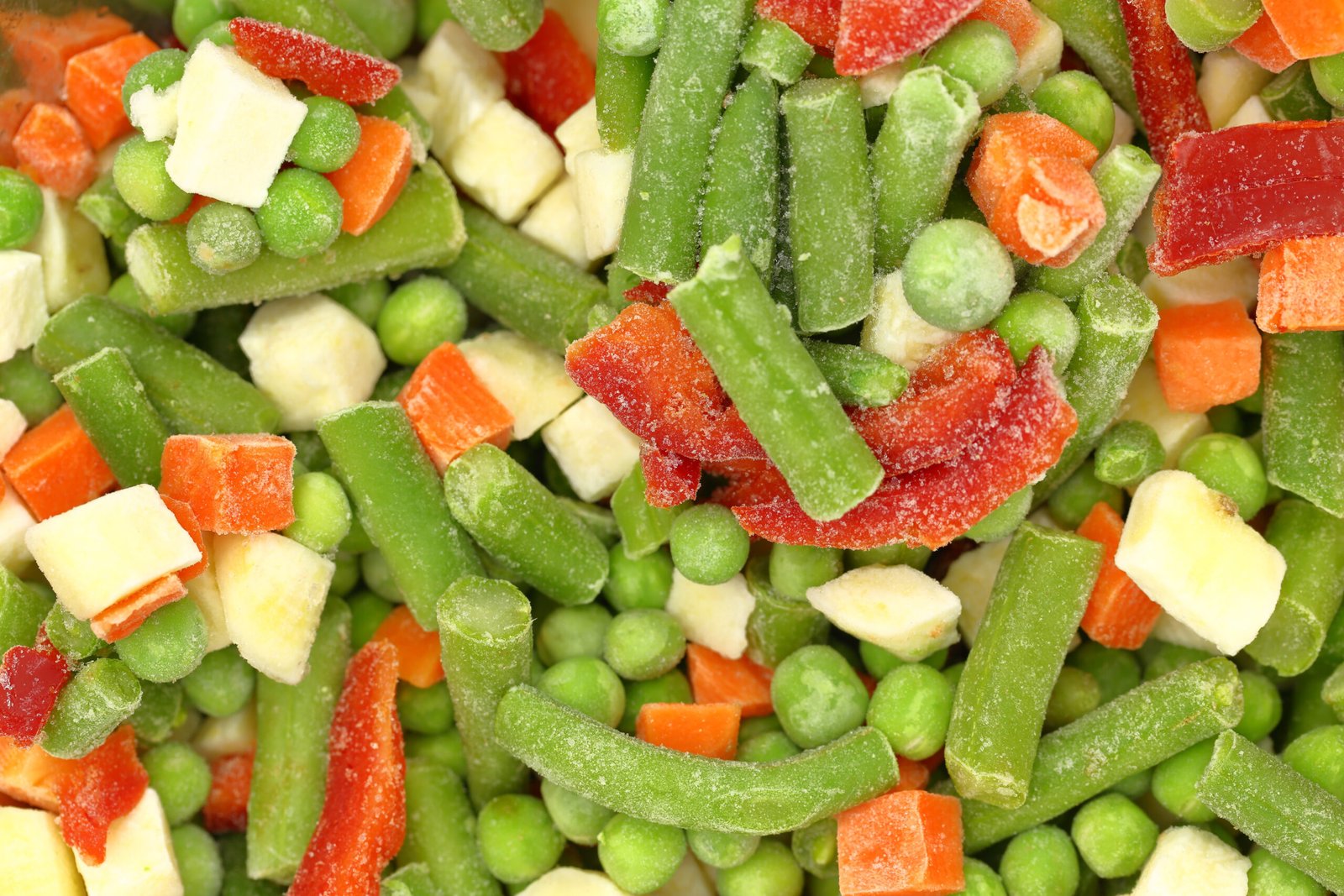
In traditional block freezing, produce is frozen slowly in trays or cartons, forming a single solid mass. In IQF, each piece — a pea, a strawberry, a mango cube — is frozen separately and very quickly, usually in a fluidised-bed or tunnel freezer where a strong upward stream of air at around –30 to –40 °C keeps the pieces moving. Within minutes the core temperature drops below –18 °C.
The result is a free-flowing product: a customer can pour out exactly the amount needed and return the rest to the freezer.
Why speed matters: ice crystals and quality
When food freezes slowly, water forms large ice crystals that rupture cell walls. On thawing, juice leaks out and the texture becomes soft. Fast freezing creates many small crystals that cause far less damage, so IQF fruit keeps more of its shape, colour, juice and bite. Vegetables frozen within hours of harvest also retain vitamins very well — often better than fresh produce that has spent days in transport and storage.
The IQF production process
- Harvest at optimum maturity — the raw material must be at peak ripeness and quality.
- Reception and washing — removing soil, leaves and foreign material.
- Sorting and trimming — optical sorters and trained staff remove defects.
- Cutting — into florets, cubes, slices or strips to the specified size.
- Blanching (vegetables) — a brief hot-water or steam treatment inactivates enzymes that would otherwise cause colour and flavour loss in storage. Most fruits are not blanched.
- Cooling and de-watering — removing surface water so pieces do not stick.
- IQF freezing — in a fluidised-bed or spiral tunnel freezer.
- Grading, metal detection and packing — into retail bags or bulk poly-lined cartons.
- Cold storage at –18 °C or below — until loading into reefer containers.
Egypt’s strengths in IQF produce
Egypt is a leading supplier of frozen strawberries to Europe and a major exporter of frozen vegetables such as okra, molokhia, green beans, peas, artichokes and mixed vegetables. Long growing seasons mean raw material is available for most of the year, and Egyptian processors increasingly operate under BRCGS, IFS or ISO 22000 food safety systems. Golden Roots supplies a broad IQF range, including:
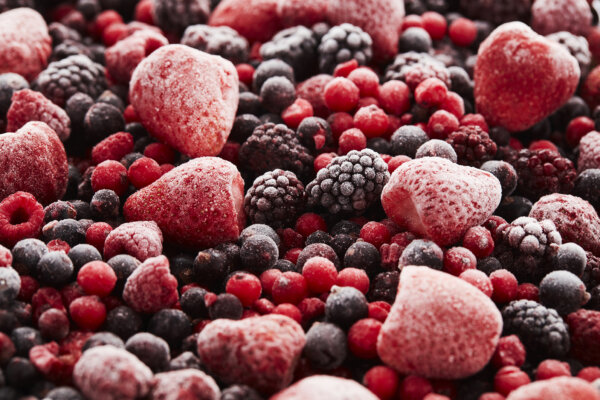
- IQF strawberries — whole and sliced
- IQF mango — cubes and slices
- IQF guava and pomegranate arils
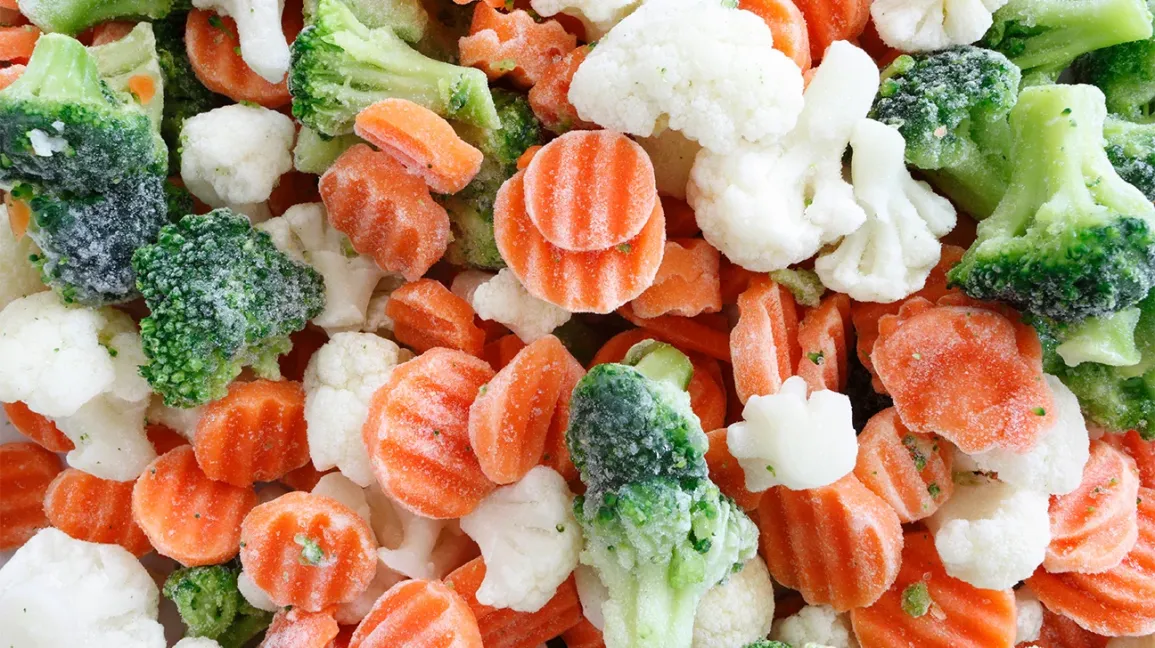
- broccoli, cauliflower, peas & carrots, green beans and okra
- frozen pommes frites and minced molokhia
Specification checklist for IQF buyers
| Parameter | What to specify |
|---|---|
| Cut and size | e.g. mango cubes 10–20 mm, broccoli florets 20–40 mm |
| Defects | Maximum % of broken pieces, discoloured units, foreign matter |
| Clumping | Product should be free-flowing; limit on lumps |
| Brix (fruit) | Minimum sugar content for strawberries and mango |
| Microbiology | Limits for total plate count, E. coli, Salmonella, Listeria |
| Residues | Compliance with destination MRLs |
| Packing | Retail 400 g / 1 kg bags or bulk 10–20 kg cartons |
| Shelf life | Typically 24 months at –18 °C |
Handling and storage
The enemy of IQF quality is temperature fluctuation. Every time product partially thaws and refreezes, crystals grow, pieces clump and frost forms in the bag. Insist on reefers set to –18 °C or colder, fast unloading and immediate transfer to cold storage. Temperature recorders in the container provide proof of an unbroken cold chain.
Uses and market opportunities
IQF fruits are used in smoothies, yoghurts, bakery fillings, jams, ice cream and juice blends; IQF vegetables in ready meals, soups, food service and retail freezer aisles. Private-label retail packs are an excellent way for importers to build their own brand with consistent year-round supply.
Looking for a reliable IQF partner in Egypt? Contact Golden Roots for specifications, samples and container offers.
Frequently Asked Questions
What does IQF mean?
IQF stands for Individually Quick Frozen. Each piece of fruit or vegetable is frozen separately in a fast stream of very cold air, so the pieces stay free-flowing instead of forming one frozen block.
How long can IQF products be stored?
Most IQF fruits and vegetables keep their quality for up to 24 months when stored continuously at –18 °C or colder.
Are IQF vegetables as nutritious as fresh ones?
Because they are frozen within hours of harvest, IQF vegetables often retain vitamins and colour better than fresh produce that has spent many days in transport and storage.