English
 العربية
 Français
 Deutsch
 Nederlands
 中文
 Русский
Packaging is far more than a box. For fresh and frozen produce it protects the product, controls temperature and moisture, carries legally required information and — on the retail shelf — sells your brand. Choosing the wrong pack can cause damage, rejections or wasted container space. This guide explains the main export packaging formats and how private labelling works with Golden Roots.
What good export packaging must do
- Protect against bruising, crushing and vibration during handling and transport.
- Ventilate so cold air can reach every fruit and respiration heat can escape.
- Stack safely on pallets for long voyages, even in high humidity.
- Inform — carry the product name, origin, class, size, weight and traceability code.
- Fit the market — match the format your customers and retailers expect.
Main packaging formats
Corrugated cartons
The workhorse of fresh produce exports. Telescopic (two-piece) and open-top cartons are used for citrus, grapes, mangoes, pomegranates and many vegetables. They are ventilated, often wax- or coating-treated for humidity resistance, and sized to standard pallets. Citrus is commonly shipped in 15 kg cartons, with 7–8 kg options for retail programmes.
Mesh bags
Breathable and economical, mesh bags of 5, 10 and 25 kg are the standard for potatoes, onions, garlic and other robust root vegetables. Jumbo bags of around one tonne are used for processing customers.
Plastic boxes and crates
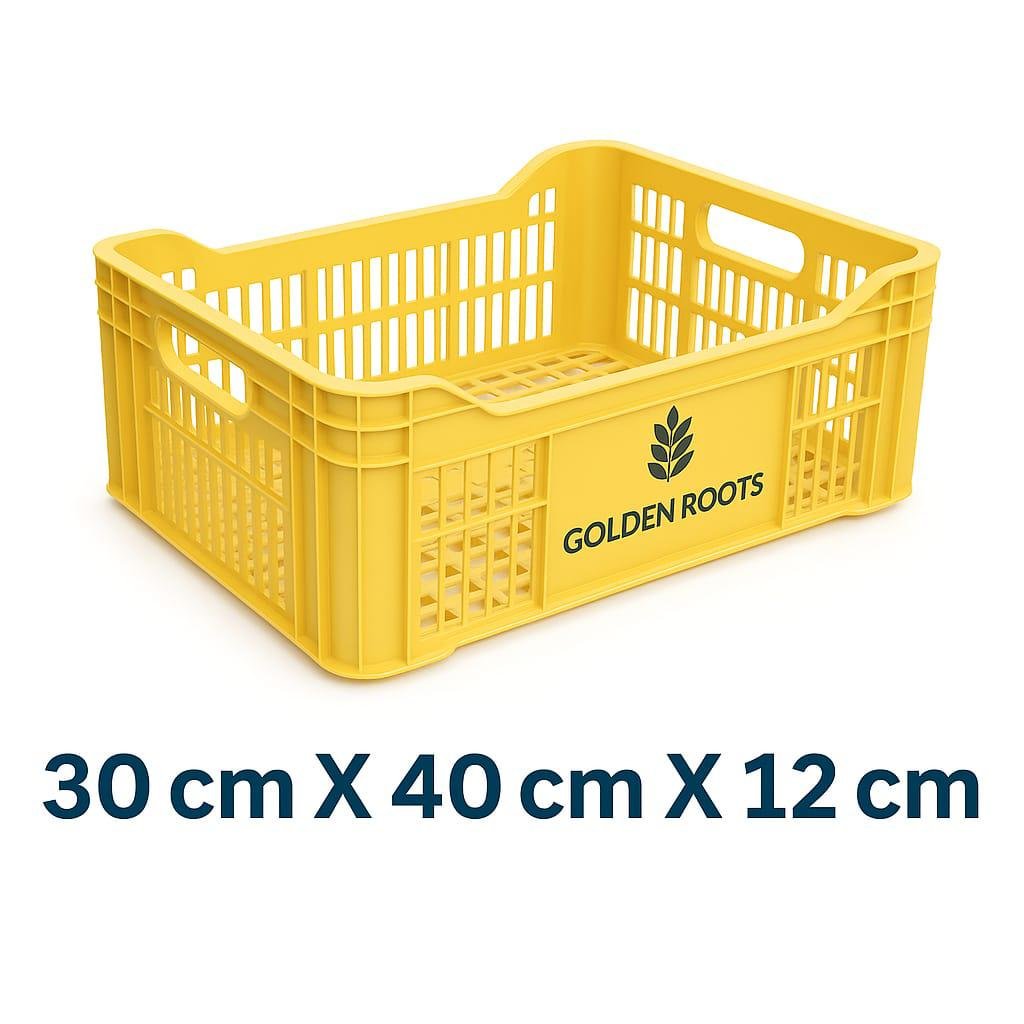
Rigid plastic boxes protect delicate fruit and can be reused in closed-loop systems. Pomegranates, for example, are often packed in 5 kg plastic boxes. Learn more on our plastic packaging page.
Punnets and clamshells
Retail-ready punnets of 225–500 g are used for strawberries and grapes, packed inside outer cartons. They reduce handling at destination and allow your brand to be printed directly on the label.
Frozen food packaging
IQF products are packed in printed retail bags (400 g, 1 kg, 2.5 kg) or in bulk: blue food-grade polyethylene bags of 10–20 kg inside strong cartons. Bags must remain flexible and intact at –18 °C or lower.
Pallets and container loading
Packaging dimensions determine how many units fit on a pallet and in a container. For example, 15 kg telescopic citrus cartons are typically loaded at about 1,600–1,664 cartons per 40ft reefer, while open-top cartons fit about 1,300. Ask your exporter for the pallet pattern so you can plan unloading, storage and distribution.
Labelling requirements
Labels must satisfy the destination market’s rules. They commonly include:
- Product name, variety and commercial type
- Class and size or count
- Net weight and number of units
- Country of origin — Egypt
- Packer or exporter name and address, or an official code
- Lot or traceability number and packing date
- For frozen retail packs: ingredients, storage instructions, best-before date and nutrition information in the local language
Private label: your brand, our quality
Private labelling allows importers, wholesalers and retailers to sell Egyptian produce under their own brand. Golden Roots offers custom-printed cartons, bags, punnets and labels. The typical process is:
- You share your brand artwork and the information required in your market.
- We check technical details — dimensions, printing method and regulatory text.
- Digital proofs are approved, followed by printing.
- Your packaging is used for the agreed production runs, with photos before loading.
Lead times and minimum quantities depend on the packaging type, so it is best to start the process several weeks before the season.
Sustainability
Buyers increasingly ask for recyclable and reduced-plastic solutions. Options include recyclable corrugated cartons, mono-material bags, reusable crates and right-sized packaging that reduces wasted space. Tell us your sustainability targets and we will propose suitable formats.
Ready to design your packaging programme? Visit our packaging page or contact our team.
Frequently Asked Questions
Can I get produce packed under my own brand?
Yes. Golden Roots offers private-label packing — custom printed cartons, bags and labels — subject to agreed artwork, minimum quantities and lead times.
What information must appear on export packaging?
Labels usually show product name, variety, class, size or count, net weight, country of origin, packer or exporter details and a traceability code, plus any language or market-specific requirements.
How many cartons fit in a 40ft reefer?
It depends on carton size and pallet pattern. For example, 15 kg citrus cartons are often loaded at about 1,300–1,660 cartons per 40ft reefer.