English
 العربية
 Français
 Deutsch
 Nederlands
 中文
 Русский
For perishable products, the cold chain is everything. A perfect harvest can arrive as a rejected container if the temperature is wrong for just a few days. This guide explains how fresh and frozen produce is protected from the Egyptian farm to your warehouse — and what importers should check at every step.
What is the cold chain?
The cold chain is the unbroken sequence of temperature-controlled steps a product passes through: harvest, pre-cooling, cold storage, loading, ocean or air transport, discharge, customs, distribution and retail. Every link must hold the right temperature and humidity; a single break can shorten shelf life dramatically.
Step 1: Harvest and pre-cooling
Fresh produce continues to breathe after harvest, generating heat and losing moisture. Removing this “field heat” quickly is the most important single action for quality. Methods include forced-air cooling (grapes, strawberries, citrus), hydro-cooling (some vegetables) and room cooling. Reefer containers are designed to maintain temperature, not to cool warm cargo — loading warm product causes condensation, ripening and decay.
Step 2: Choosing the right temperature
Each product has its own optimum. The table gives typical guidance; your exporter will fine-tune settings for the variety and voyage.
| Product | Typical carriage temperature | Notes |
|---|---|---|
| Table grapes | 0 to 1 °C | High humidity; SO₂ pads |
| Strawberries | 0 to 2 °C | Very short shelf life |
| Oranges | about 2 to 5 °C | Depends on variety and protocol |
| Lemons, grapefruit | about 8 to 12 °C | Chilling-sensitive |
| Mangoes | about 10 to 13 °C | Chilling injury below ~10 °C |
| Pomegranates | about 5 to 7 °C | Prevent rind dehydration |
| Potatoes | about 6 to 10 °C | Processing potatoes kept warmer |
| Onions, garlic | 0 to 2 °C (long voyages) | Low humidity, good ventilation |
| IQF / frozen products | –18 °C or colder | No fluctuations |
Step 3: Reefer settings beyond temperature
- Fresh-air ventilation — removes ethylene and carbon dioxide produced by respiring fruit. Set in cubic metres per hour according to the product.
- Humidity — some products need high humidity to avoid shrivelling; others, such as onions, need it low.
- Controlled atmosphere — reduced oxygen and increased CO₂ can extend shelf life for certain fruits on long voyages.
- Cold treatment — some markets require fruit to be held at a specified low temperature for a set number of days against fruit flies.
Step 4: Loading correctly
Air must circulate around and through the cargo. Pallets should be stable and correctly strapped, cartons ventilated and aligned, and the load must not exceed the red line or block the T-floor. Mixing products with different temperatures or with ethylene-sensitive items (for example leafy greens with ripening fruit) should be avoided.
Step 5: Transit and monitoring
Modern reefers log temperature continuously, and many now offer real-time remote monitoring, allowing the exporter and buyer to see conditions during the voyage. Data loggers placed inside the cargo provide independent evidence of pulp temperatures. From Egypt, transit times are short — typically around a week to Mediterranean ports and around two weeks to Northern Europe — which already helps product quality.
Step 6: Arrival and distribution
The most vulnerable moments are at the destination port and during customs inspection, when containers may be unplugged or opened. Arrange prompt clearance, plug-in power at the terminal and fast transfer to cold stores. On receipt, check pulp temperatures, the reefer download and the condition of the product before accepting.
Frozen products: no room for fluctuation
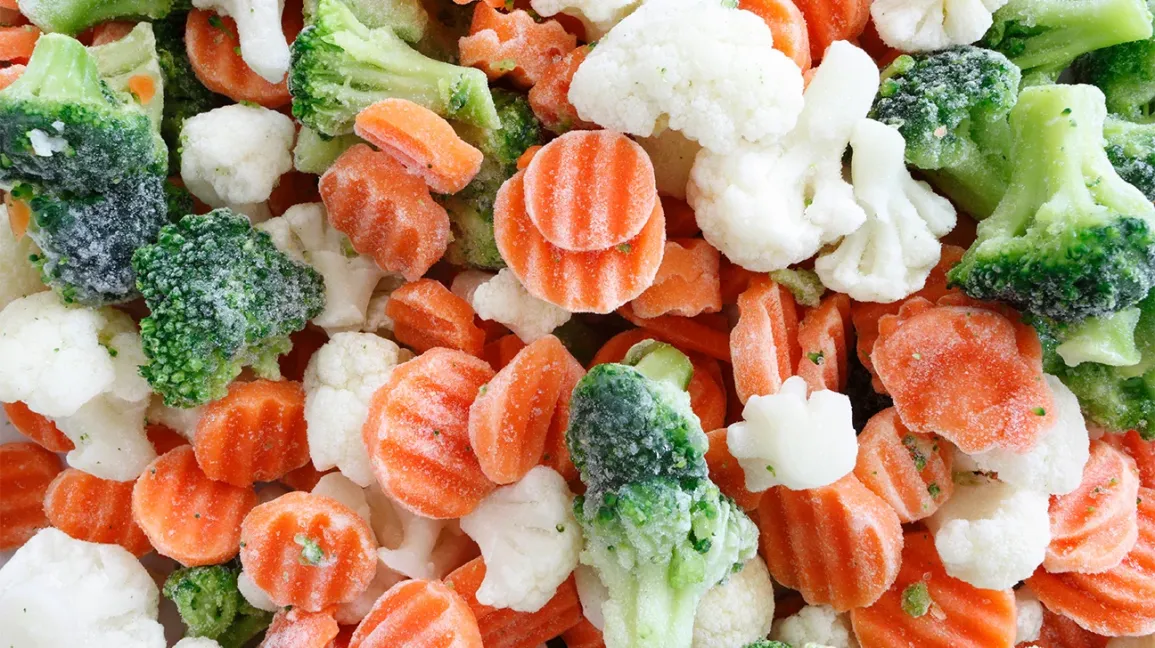
IQF fruits and vegetables must stay at –18 °C or colder. Even short temperature rises cause ice crystals to grow, pieces to clump and frost to form inside bags. Insist on pre-cooled containers, rapid loading from cold stores and quick unloading. Read our article on IQF technology to learn more.
How Golden Roots protects your cargo
- Pre-cooling and cold storage at partner packing houses and processors
- Container pre-trip inspection and correct set-points for each product
- Loading supervision with photos and temperature records
- Shipment tracking and full documentation
Have a question about shipping a specific product? Talk to our logistics team.
Frequently Asked Questions
What is a reefer container?
A reefer is a refrigerated shipping container with its own cooling unit that keeps cargo at a set temperature — from around +13 °C for some tropical produce to –18 °C or lower for frozen food.
Why is pre-cooling important?
Reefer units are designed to maintain temperature, not to remove field heat. Produce must be pre-cooled to its target temperature before loading to avoid ripening, condensation and decay.
Can different products share one reefer?
Only if they need compatible temperatures and humidity and are not sensitive to each other’s ethylene. Your exporter should plan mixed loads carefully.